You spent hours picking the perfect outfit. Your accessories? On point. But when you scroll through party pics the next morning—why do you look washed out, shiny, or worse, like someone else entirely? Standard daytime makeup crumbles under strobe lights, phone flashes, and harsh indoor lighting. The fix isn’t more product—it’s smarter strategy. Here’s how to engineer party makeup for photos that survives the lens.
Why Your Go-To Makeup Fails in Party Photos
Daylight forgives. Camera flashes don’t. Most cosmetics are formulated for ambient light—not the unforgiving spike of a point-and-shoot burst or LED party bulb. Matte foundations oxidize weirdly under mixed lighting. Glossy lids become glare traps. And contour that looks sculpted IRL? Turns into muddy shadows on screen.
And here’s the kicker: social media filters amplify texture errors. A slightly uneven base gets magnified by AI skin-smoothing that overcompensates, leaving you looking like a plastic mannequin. Not the vibe.
Step-by-Step Guide to Party Makeup for Photos That Pops
Forget “more is more.” Precision beats product overload every time. Follow this sequence—backwards from how most people apply makeup—and you’ll dominate the group shots.
Prime for Light, Not Just Longevity
Ditch pore-filling primers that sit chalky under flash. Use a neutral-toned, light-reflective primer (think luminous, not sparkly) on high points: cheekbones, brow bone, cupid’s bow. It creates micro highlights that read as dimension—not oil—on camera.
Foundation: Sheer Layers > Full Coverage
Apply one sheer layer with a damp sponge. Let it set. Then, only spot-conceal where needed. Heavy coverage = mask-like flatness in photos. Your skin needs to *breathe* optically.
Contour & Highlight Like a Cinematographer
Use cool-toned contour (not orange!) just below cheekbones and jawline—but keep it diffused. For highlight, skip glitter. Opt for a liquid with fine pearl (not chunky shimmer). Blend upward toward temple, not outward—that’s where flash hits hardest.
Set Strategically, Not Uniformly
Loose powder only on T-zone and under eyes. Leave cheeks slightly dewy. Why? Powdered cheeks disappear in low-light photos, making your face look hollow.
| Technique | Photo-Ready Result | Risk If Done Wrong |
|---|---|---|
| Matte full-coverage foundation | Flat, lifeless skin; no light bounce | Looks like stage paint under flash |
| Sheer base + targeted concealer | Natural depth, retains skin texture | None—if blended well |
| Warm-toned contour | Orange cast in mixed lighting | Reads as dirt, not shadow |
| Cool-toned, diffused contour | True shadow mimicry | Slight learning curve |
| Heavy setting powder everywhere | Mattified cheeks vanish in dim light | Face looks disconnected |
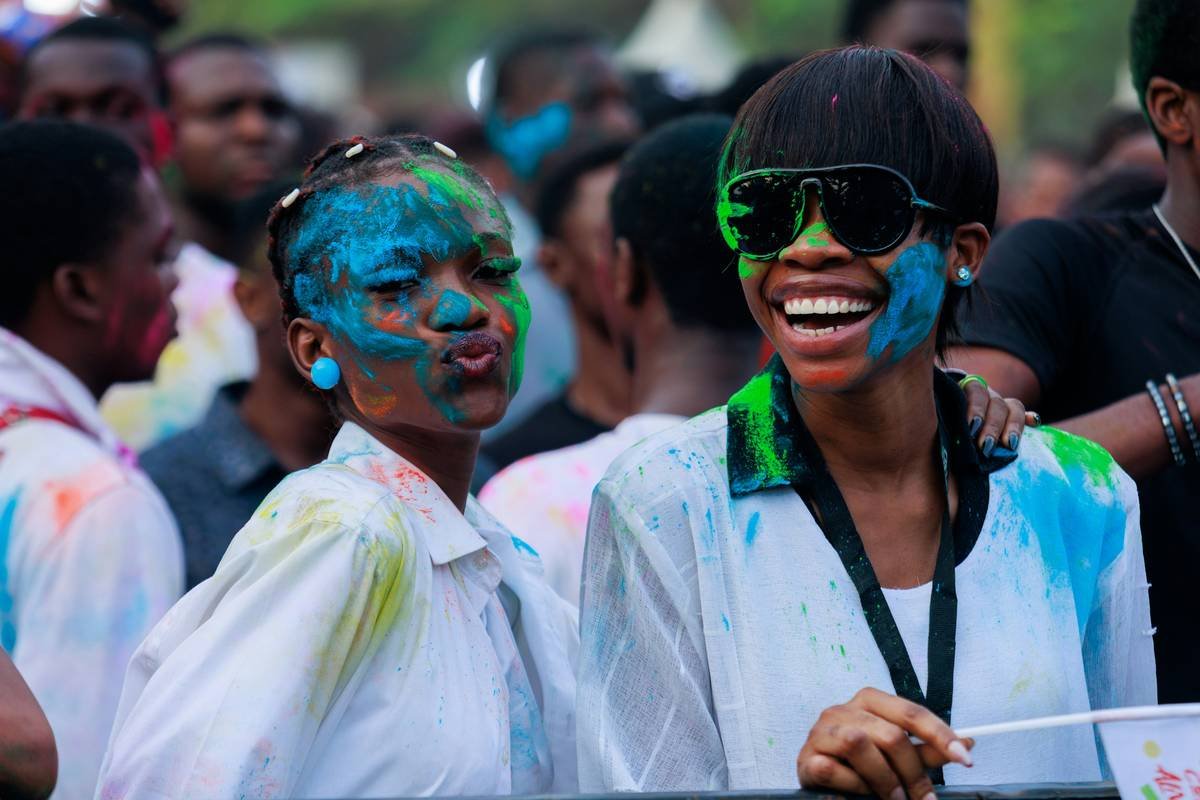
The Industry Secret: Shoot Test Shots Mid-Makeup
Here’s what pro MUAs on fashion shoots do—and what 99% of partygoers skip: take a test photo after each major step. After foundation? Snap a pic with your phone flash ON. Same after contour. And again post-powder.
Why? Because your mirror lies. Phone cameras replicate real-world conditions better than any vanity light. One quick image reveals if your blush disappears or your highlight turns into a headlight. Adjust in real time. It takes 30 seconds—and saves your entire look.
The math is simple: five test shots beat one hundred retakes tomorrow morning.
FAQ
How do I stop my makeup from looking shiny in party photos?
Blot, don’t powder excessively. Use a silica-based blotting paper pre-photo, and avoid heavy creams on cheeks. Focus shine control only on forehead, nose, and chin.
Should I wear false lashes for party makeup for photos?
Yes—but go for wispy, criss-cross styles, not dense strips. Thick lashes cast dark shadows over eyes in overhead lighting, making you look tired.
What lipstick finish photographs best at parties?
Satin. Matte dries out and cracks under heat; gloss reflects flash and bleeds. Satin gives rich color with subtle sheen that reads vibrant without glare.